

A close friendship can remain a friendship, become romantic or change in other ways. Shared history may give you things to appreciate about each other, but it does not prove that attraction is mutual or that dating will suit you both.
You do not need to take a romantic risk to show that the friendship matters. If you are considering a date, these five questions can help you work out what you want to ask and what choices you are prepared to respect.
On this page
1. What are you hoping to explore?
Start with your own interest. Do you want to try a date with this person, or are you hoping a relationship would remove loneliness, make an uncertain friendship feel secure or settle other people’s speculation about you?
Several feelings can be present at once. You do not have to explain them perfectly before speaking, but it helps to know the question you actually want to ask. Enjoying someone’s company is different from knowing that you want the same kind of partnership.
Consider what you know and what remains open. You may have shared humour, interests and difficult days. You may not know how you would handle exclusivity, money, physical intimacy or different long-term plans as partners. Familiarity gives you a starting point for discussion, rather than answers to every relationship question.
2. Is the interest freely returned?
Warmth, frequent messages and spending time together can be part of friendship. None of them establishes permission to kiss someone or proves that they secretly want to date. Friends’ comments about your chemistry are opinions, not an answer from the person involved.
If your friend has already declined romance, take that answer seriously. Continuing to be kind does not reopen the question. Our article on why being nice does not guarantee a date explores the difference between care and an expectation of romantic repayment.
If you have not discussed it and an invitation would be appropriate, ask rather than testing a theory through jealousy or unwanted physical contact. You can be interested without presenting the friendship as evidence that they should feel the same way.
3. Can you make an invitation without pressure?
Choose a moment when both of you can respond freely. Avoid turning a group gathering into a public declaration or asking when someone depends on you for a ride home. A simple invitation can be easier to answer than a long account of every feeling you have had.
For example: “I value our friendship, and I would be interested in going on a date with you. Would you like that?” Let them answer without promising that everything must stay exactly the same afterward. Neither of you can guarantee how the conversation will feel.
They may say yes, no or that they need time. You do not have to argue with a no or keep asking for a more reassuring explanation. If they want time, give them room and carry on making your own plans. An unanswered invitation does not require you to keep your life on hold.
4. What would you need to discuss if you date?
A first date can be a chance to learn something new about each other. You do not have to treat it as a commitment to a permanent partnership or immediately involve everyone in your shared social circle.
Talk about the arrangements that matter now. You might discuss:
- Whether you are trying a date or agreeing to an ongoing relationship.
- What, if anything, you want to tell mutual friends, and when.
- What physical affection feels welcome, with room to change your mind.
- Whether either person is dating others and what exclusivity would mean.
Existing trust does not remove the need to ask about boundaries. Nor does knowing someone’s history give you permission to share private details. You can discover a difference in expectations even when you have been friends for years.
Keep noticing how the arrangement works for both people. A familiar connection still needs considerate behaviour, practical agreements and the freedom to say that dating is not right for you.
5. How will you handle a different answer?
If your friend does not want to date, disappointment does not make your feelings wrong. Their answer also does not mean the friendship was a trick or that they owe you a chance because of the care you have given them.
Consider what contact you can manage. You might remain friends, prefer group plans for a while or need some space. Describe your own participation: “I respect your answer. I need a little distance from one-to-one plans while I work out how I feel.” Avoid using distance as a test of whether they will miss you enough to change their mind.
The same care matters if you try dating and one person wants to stop. Friendship afterward is a separate choice for both of you, not a promise either person must fulfil immediately. Keep mutual friends out of persuasion or blame, and respect what you agreed to keep private.
The Mental Health Foundation’s relationship guidance offers further ideas on boundaries, listening and making room for differences. You can value the friendship while choosing an honest conversation, keeping it platonic or taking time to decide. Dating is an option to consider together, rather than a required next stage of being close.
Picture the next time you’ll see each other
Imagine you and a close friend volunteer together each Saturday. If you’d like to ask them on a date, choose a private moment outside the group and leave them an easy way to decline. You could say, “I’d enjoy getting dinner as a date if you’re interested. I’m happy to keep things as friends if you’d prefer.”
If they say yes, discuss what you want people in the group to know. If they need time, ask whether they’d prefer to bring it up themselves. If they decline, respect the answer and decide what would help you show up comfortably at the next group meeting. The research on relationships that began as friendships describes one route people take into romance. It leaves the question of interest up to the two people involved.
Read the infographic in text
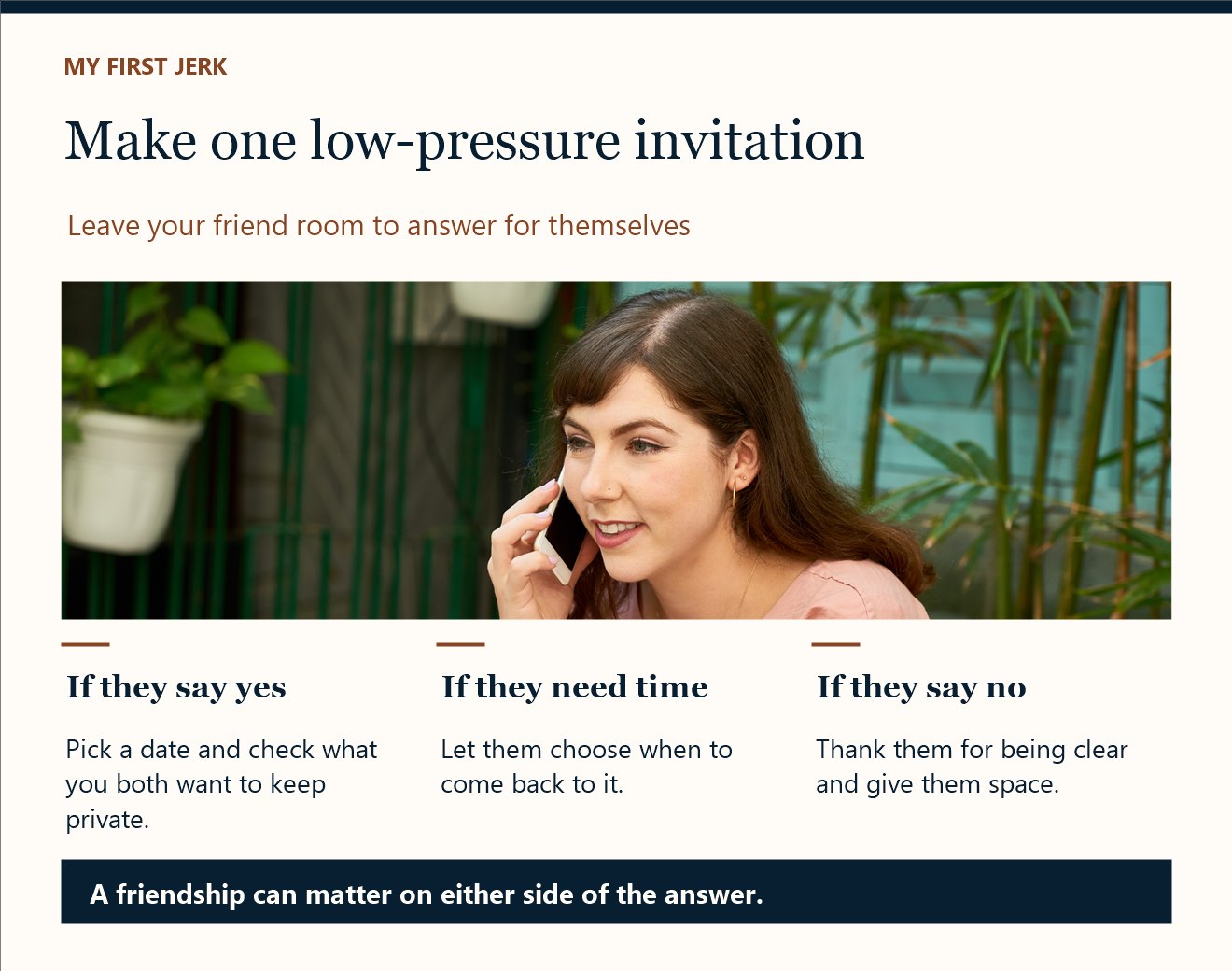
Make one low-pressure invitation
Leave your friend room to answer for themselves
- If they say yes Pick a date and check what you both want to keep private.
- If they need time Let them choose when to come back to it.
- If they say no Thank them for being clear and give them space.
A friendship can matter on either side of the answer.