

Sharing a home can be exciting, convenient and a significant change to everyday life. It is a choice to discuss together, whether you hope to marry, prefer another kind of commitment or are still considering your future.
Living together does not automatically prove compatibility or settle what each person wants. Before setting a moving date, talk through the practical arrangements and whether both people freely want the change.
On this page

1. Say what moving in means to each of you
Ask why you want to share a home now. Is it mainly about time together, a future plan, convenience or the cost of living? Those reasons can overlap, but do not assume they mean the same thing to both people.
If marriage matters to you, talk about it directly. Moving in is not a promise of marriage unless you have actually made that agreement. Either person can want more time or prefer separate homes. A less convenient answer can still be an honest one.
2. Discuss costs and check commitments before signing
List the likely household costs and discuss what each person can manage. Consider rent or mortgage payments, utilities, food, transport and moving costs. Decide how you will keep track of shared expenses and revisit the arrangement if circumstances change.
Read any agreement before signing or making a joint commitment. Living together does not mean you can assume there will be no financial or legal obligations if you separate. The details depend on your location, circumstances and contracts; seek qualified local advice where needed.
For conversation prompts, MoneyHelper’s UK-focused guide to talking about money covers shared bills and differing approaches to spending. Check which guidance applies where you live.
3. Make household work visible
Talk about cleaning, cooking, shopping and the planning that keeps a home running. Include tasks that are easy to overlook, such as noticing supplies are low or arranging a repair. Avoid assigning them by gender or assuming one person will naturally organise everything.
Discuss what “clean enough” or “quiet at night” means to each of you. A workable arrangement can reflect different schedules and abilities. Choose a way to raise a problem before frustration builds, rather than expecting someone to notice without being asked.
4. Keep room for privacy and time apart
Sharing an address does not require sharing every password, conversation or hour. Discuss private space, friends, visitors, sleep and time alone. If children or other household members are involved, their needs and existing responsibilities belong in the conversation too.
For example, ask before inviting an overnight guest rather than assuming the other person is comfortable. Our guide to acceptance, respect and personal choice considers how differences and boundaries can coexist with closeness.
5. Agree how you will raise disagreements
Decide how to flag an issue and when to return to a difficult conversation if you need a pause. A request might be as specific as, “Can we talk tomorrow about how evening chores are divided?”
Disagreement does not have to become a judgement about the whole relationship. Notice whether both people can ask, decline and reconsider without pressure. If you are afraid to raise ordinary concerns, seek support before making the household more difficult to leave.
6. Plan a review and consider changed circumstances
Choose a time after the move to check what is working and what needs adjustment. Talk about costs, workload, privacy and whether you still want the arrangement. A review is a chance to improve daily life, rather than a test one person must pass.
Also consider what would need attention if either person wanted to move out: housing arrangements, shared purchases and ongoing responsibilities. Planning does not predict a breakup. It makes room for informed choices, including deciding that you are not ready to move in yet.
Try the shared-home budget before you sign anything
Before applying for a home, put your expected rent, utilities and moving costs in two columns. Work out which costs you’ll share and what you would each be able to pay if one person’s income changed. Keep enough information to compare the plan with living separately.
Check lease terms, payment and obligations with a qualified person or relevant local tenant service where needed. A one-week trial of ordinary routines can also help you discuss chores, quiet time and guests.
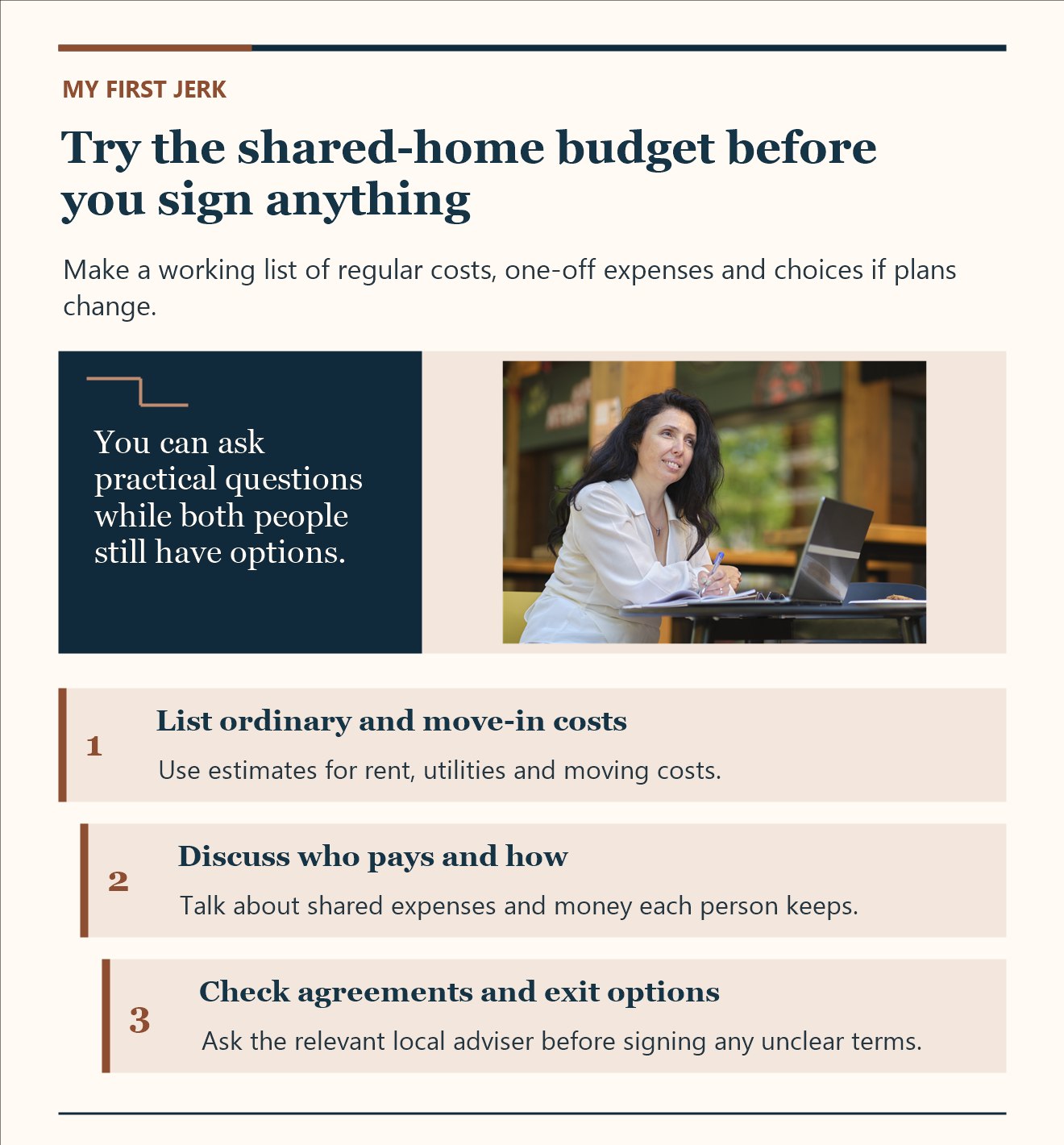
Read the infographic in text
Try the shared-home budget before you sign anything
Make a working list of regular costs, one-off expenses and choices if plans change.
- List ordinary and move-in costs Use estimates for rent, utilities and moving costs.
- Discuss who pays and how Talk about shared expenses and money each person keeps.
- Check agreements and exit options Ask the relevant local adviser before signing any unclear terms.
You can ask practical questions while both people still have options.
Frequently asked questions
1. What costs do we need to consider before moving in together?
Compare rent, deposits, utilities, transport, groceries and the cost of moving. Decide which costs are shared, what each person can afford and what could change.
2. Do we need to combine our bank accounts?
You can choose a way to share certain household costs while each keeping independent access to money. Discuss records, dates and a plan if one person’s circumstances change.
3. What should we ask before signing a lease?
Read who is responsible for rent, deposits and changes to the agreement. Ask a qualified local tenant or legal resource about unclear terms before signing.
4. How can we talk about chores before sharing a home?
Choose a real week and list the tasks, including who notices, plans and completes them. Discuss what a fair arrangement would look like and how you will revisit it.
5. Should we discuss what happens if one of us wants to move out?
Yes. Discuss who you would contact, how much notice might be needed, and what shared bills or belongings would need attention. Check your actual agreement and seek local advice when needed.