

Ending a relationship can bring sadness, relief, doubt or several feelings at once. You may care about the other person and still decide that you do not want to continue. A breakup does not require agreement from both people.
Think about what you need to communicate and what practical arrangements will follow. The aim is clarity and consideration, with your safety taking priority over a particular idea of the perfect breakup.
On this page

1. Choose a format that considers your safety
If you feel safe and want to meet, choose a place and time that let you end the conversation and leave. A phone call or message can also be a reasonable choice, depending on the relationship and your circumstances. Face-to-face contact is not an obligation.
If threats, control or stalking are a concern, seek support with a plan suited to your situation. Love is respect’s breakup guidance explains why safety can make remote contact preferable. You do not have to arrange another meeting to prove that you are being kind.
2. State your decision in clear words
Prepare a brief statement that reflects what you have decided. For example: “I have decided to end our relationship. I do not want to continue dating. I know this may be painful to hear.”
You can give a reason without listing every grievance or inviting a debate about your right to leave. If you are still deciding, say that honestly. If your decision is final, avoid suggesting a temporary break or future reunion unless that is what you mean.
3. Be considerate while keeping your decision
The other person may be upset or disagree. You can acknowledge that without taking responsibility for making them feel ready. “I understand that you want another chance. I am still ending the relationship” keeps the message clear.
Avoid insults, humiliation or sharing private details to win an argument. At the same time, you do not have to remain in a conversation that becomes threatening, pressuring or repetitive. You can end the exchange and turn to support.
4. Separate practical arrangements from the emotional conversation
Consider what needs attention: belongings, shared plans, pets, living arrangements or responsibilities involving children. You may not be able to settle everything in one conversation. Identify what is urgent and what needs a separate discussion or qualified local advice.
For a straightforward exchange of belongings, agree on a specific arrangement if it is safe to do so. Where contact is a concern, ask a support service about suitable options. Do not use practical matters as a reason to promise emotional access or reconsideration you do not want.
5. Set contact limits you can follow
Decide what contact you want after the breakup. You might want a pause, no personal contact or messages limited to necessary arrangements. State the limit plainly rather than leaving the other person to guess.
For example: “Please email me only about collecting our belongings. I am not available for conversations about getting back together.” Respect any limits the other person sets too. Friendship is a separate, mutual choice; neither person owes it as compensation for the breakup.
6. Arrange support for what comes next
Think about the first day or two after the conversation. You might arrange company, choose somewhere comfortable to stay or keep an ordinary plan that helps structure your day. Leave room for mixed feelings without treating them as instructions to reverse your decision.
If you are reconsidering, return to the reasons and circumstances that matter to you. Our guide to hope, change and leaving a relationship offers questions for that reflection. You can take care of yourself without finding a painless explanation or a perfect ending.
Give a breakup message one purpose and an ordinary exit
If you have decided to end the relationship, say “I’ve decided to end our relationship. We can talk about how to return the keys when it’s safe and useful.” You can respond to surprise or hurt with care while keeping your decision clear.
If meeting would put you at risk, get private support to consider an alternative. When you share financial or legal responsibilities, seek local advice so you understand what you may still need to do.
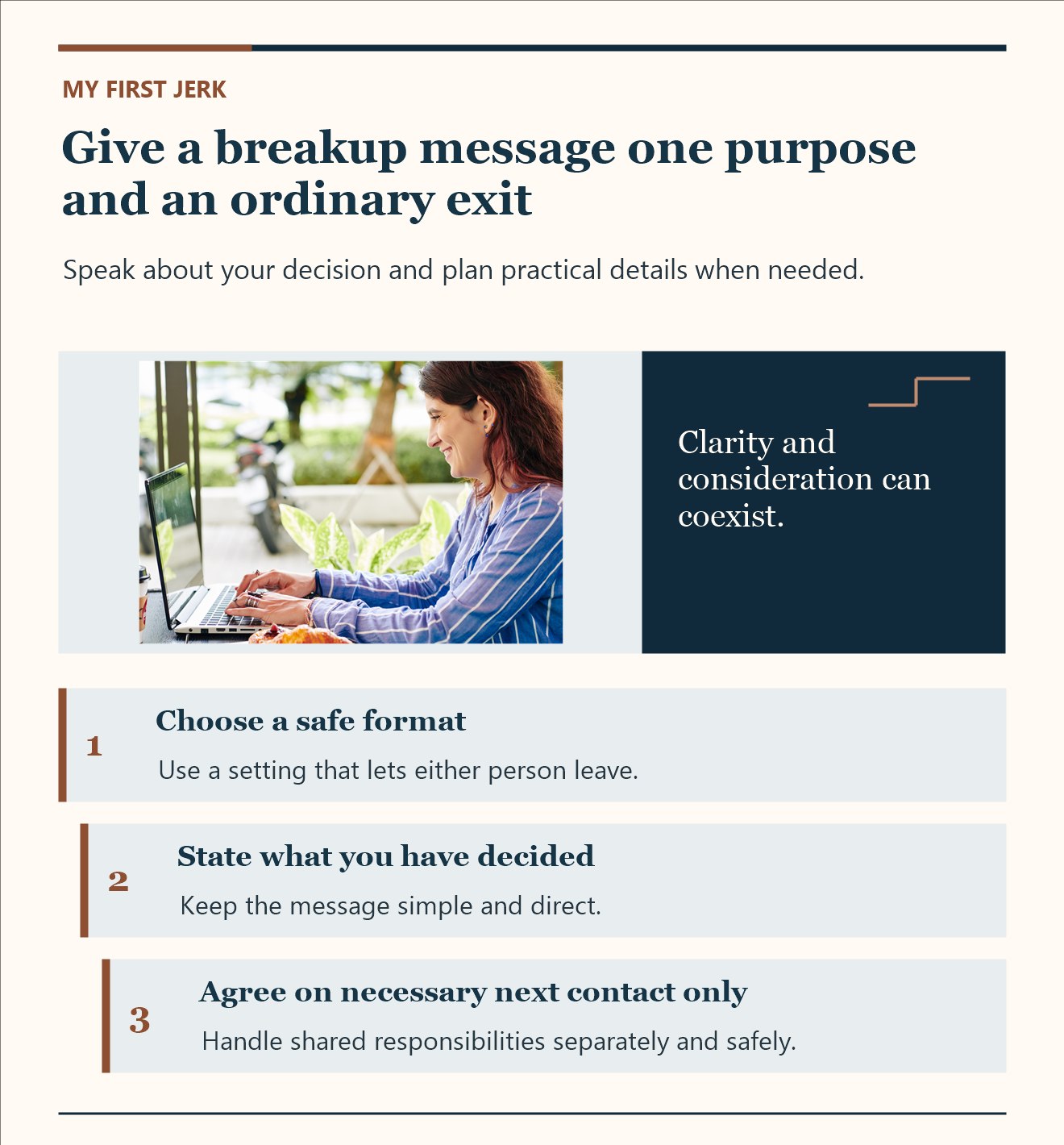
Read the infographic in text
Give a breakup message one purpose and an ordinary exit
Speak about your decision and plan practical details when needed.
- Choose a safe format Use a setting that lets either person leave.
- State what you have decided Keep the message simple and direct.
- Agree on necessary next contact only Handle shared responsibilities separately and safely.
Clarity and consideration can coexist.