

Caring for yourself can be part of dating, whether you feel confident, uncertain or somewhere in between. You do not have to reach perfect self-love before you deserve affection, and a relationship is not a reward for completing enough personal work.
The five ideas below are ways to make ordinary life more workable. Choose one that fits your circumstances rather than turning self-care into another demanding checklist.
On this page

1. Notice a need without judging it
Ask what has been getting pushed aside lately. You might need rest, company, a quieter evening, time for a responsibility or a chance to enjoy an interest. Wanting something does not mean you can meet every need immediately, but naming it gives you a starting point.
Be specific about what you can change. Instead of deciding that you must become more confident, you might decide to give yourself an evening before agreeing to another date. Your preferences can be part of the decision, even when someone else would choose differently.
2. Protect a little time that feels like yours
Choose a manageable activity or pause. You could read a few pages, cook something simple, spend time outside if that is accessible or talk with a friend. Rest can also be a worthwhile choice. There is no requirement to make the time impressive or productive.
If your schedule is crowded, start with a small adjustment rather than a complete routine. You might decline an optional plan or ask to meet another day. You can be considerate about someone’s disappointment without automatically changing your answer.
3. Reflect in a way that suits you
A short note can help you notice what you want from dating: what felt comfortable, what felt pressured and what you would like to ask next time. You could write three sentences, use a private voice note or simply think it through. Journaling is an option, not a requirement.
Consider privacy when choosing where to keep personal reflections. You do not have to share them with a date. If reflection turns into repeatedly criticising yourself, step away and consider a more concrete question, such as what would make the next conversation easier.
4. Choose care within your means
Your worth does not depend on buying gifts, dressing up or paying for a special experience. Spending money can be enjoyable when you want to and can afford it, but free or ordinary acts of care count too.
Try a more accurate response to harsh self-talk. “That date did not lead to another one” is different from “No one will ever want me.” You do not have to force a positive feeling; you can question a sweeping judgement without denying disappointment.
5. Accept support and look for mutual care
You do not have to meet every emotional need alone. Friends, family you trust, community and professional support can all have a place, depending on what you want and what is available. Asking for company or help does not make you unfit for a relationship.
Within dating, notice whether both people have room to ask, decline and take an interest in each other. Our guide to affection, reassurance and space considers how closeness can remain freely chosen.
For this week, choose one small action: keep a plan with a friend, leave time after a date to reflect or say what kind of contact you would enjoy. You can care about a possible relationship while keeping room for the rest of your life.
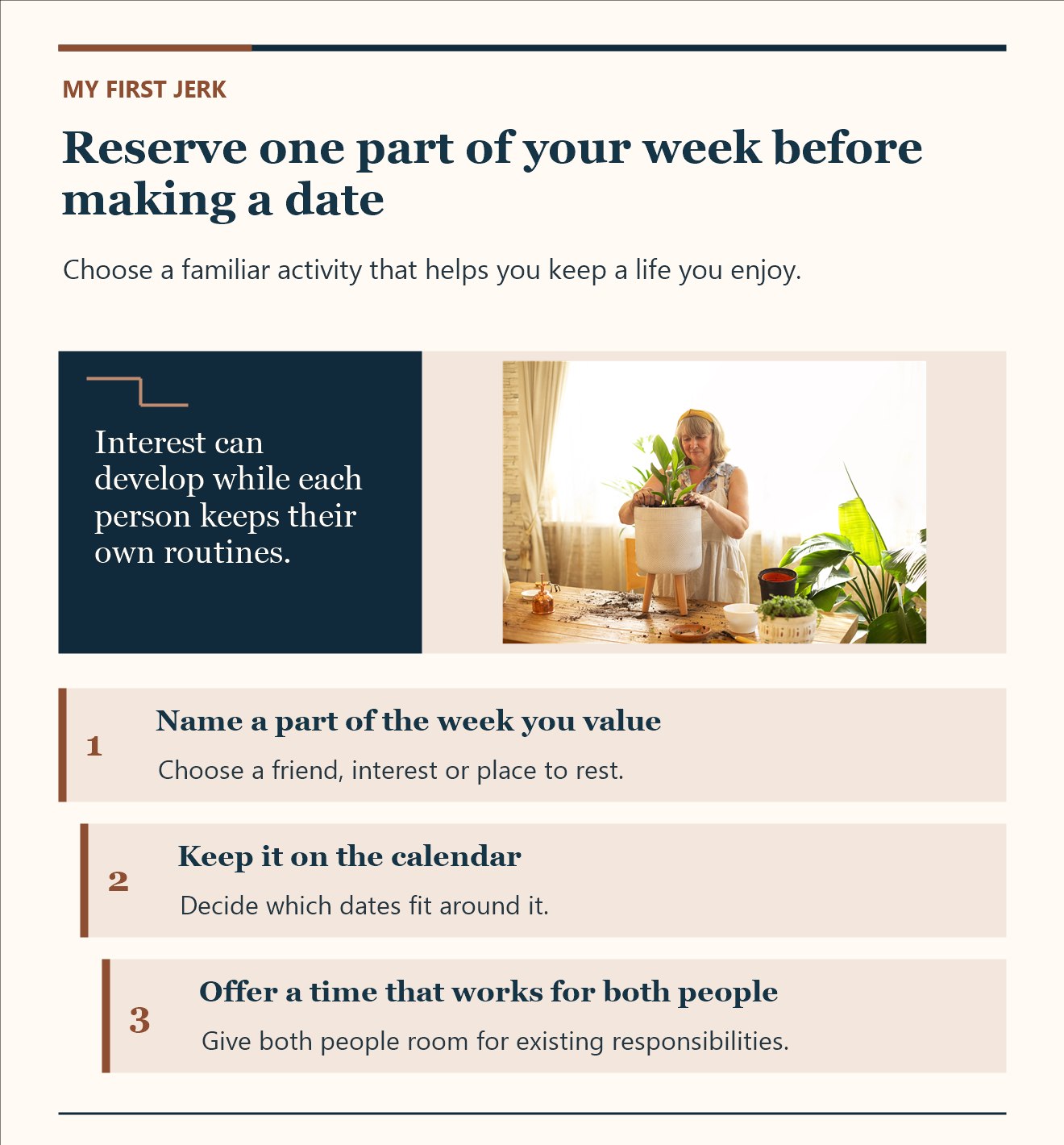
Reserve one part of your week before making a date
If regular Wednesday evenings are your time for language practice or speaking with a friend, protect that hour and offer an available time for a date. You can reconsider the schedule later if you want to, and the other person can do the same.
Notice whether proposed changes leave you feeling free to say no. The way you handle small choices can make larger conversations about independence easier.
Read the infographic in text
Reserve one part of your week before making a date
Choose a familiar activity that helps you keep a life you enjoy.
- Name a part of the week you value Choose a friend, interest or place to rest.
- Keep it on the calendar Decide which dates fit around it.
- Offer a time that works for both people Give both people room for existing responsibilities.
Interest can develop while each person keeps their own routines.