

I used to fear the concept of karma. I used to be very afraid at the thought of getting punished for telling lies, hurting someone else, and any other wrong I’d unintentionally committed in my past, whether in this life or another.
If you understand karma through the idea of balance, it can offer a way to reflect on choices, compassion and responsibility. Beliefs about karma and different lifetimes vary; you do not have to interpret every difficult experience as a punishment or a lesson someone deserved.
On this page

Use balance to reflect on choices
A useful reflection starts with something you can describe: a promise you did not keep, a conversation that hurt or a decision you now want to reconsider. Ask what happened and what you can do about it, rather than trying to calculate a spiritual debt.
Balance can mean making room for both responsibility and care. You may need to acknowledge an action without deciding that your entire character is bad. You may also need rest, support or more information before choosing a next step.
Let empathy and accountability coexist
Trying to understand another person’s situation can broaden your view. It does not require agreeing with their actions or knowing exactly how they feel. Ask questions where conversation is welcome, and leave room for an answer that differs from your assumptions.
Compassion can include clear accountability: naming a broken agreement, listening to its effect and considering a practical change. “I understand that you were upset” does not need to become “It was acceptable to threaten me.” Another person’s circumstances do not make you responsible for their harmful choices.
Choose repair you can actually offer
If you have hurt someone, consider what is within your control. You might give a specific apology, return something that belongs to them or change how you handle a recurring responsibility. Ask what would be helpful without making the person responsible for relieving your guilt.
Repair cannot guarantee forgiveness or a continuing relationship. If someone has asked for distance, respect that request. A spiritual wish to put things right does not override another person’s boundary.
You can consider trust through accountability and specific agreements where both people freely want to continue. There is no requirement to declare everything resolved after one conversation.
Keep boundaries in a compassionate life
You can care about someone and decide that a relationship should end. You do not have to remain available for mistreatment to demonstrate kindness, spiritual growth or loyalty.
If there are threats, coercion or fear of retaliation, seek private support from an appropriate local service before announcing plans or arranging a meeting. Your safety does not depend on knowing what the situation means spiritually.
Some readers find comfort in beliefs about angels, guides or life beyond the present. Such beliefs can be a personal source of meaning while practical help and boundaries remain available.
Make room for your own worth
Regret can point toward an action you want to change. It does not establish that you deserve harm or must accept whatever another person offers. Receiving care is not a prize reserved for people who have never made a mistake.
Equally, another person’s suffering is not evidence of a fault in a past life. You can respond to what they say they need, offer help they welcome or simply listen without trying to explain why the experience happened.
Choose one act of care today
For a short reflection, write down one action you want to take responsibility for and one way you can care for yourself or someone else. Keep both small enough to carry out: clarify an agreement, offer an apology without demands or make time for a conversation that is wanted.
If you do not know what to do, seeking support is also an option. You do not need a complete explanation of karma to choose a respectful next step. The idea of balance can leave room for learning, compassion and decisions grounded in the life you are living now.
Choose a repair you can offer without making a bargain
If you spoke sharply to someone who asked for help, acknowledge the interruption or words you used and ask whether they would like you to listen now. Give them room to decline the conversation. Your next choice can reflect what balance means to you.
If repair or direct contact isn’t welcome, consider what you can do differently in another situation. You can care about the effect of something you did without using future events to judge another person’s worth.
Read the infographic in text
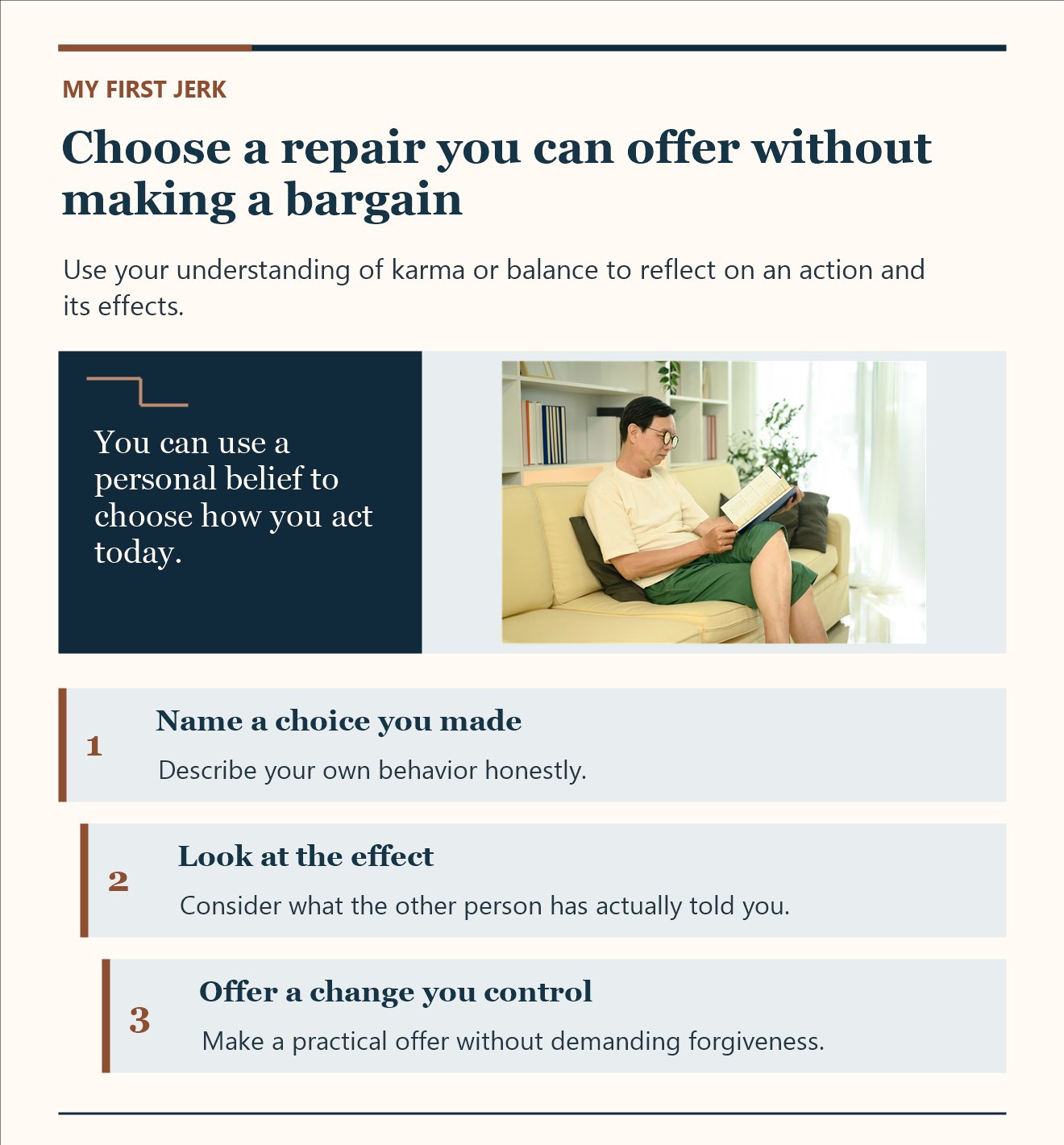
Choose a repair you can offer without making a bargain
Use your understanding of karma or balance to reflect on an action and its effects.
- Name a choice you made Describe your own behavior honestly.
- Look at the effect Consider what the other person has actually told you.
- Offer a change you control Make a practical offer without demanding forgiveness.
You can use a personal belief to choose how you act today.