

After trust is broken, both people may be unsure whether they want to continue the relationship. Repair can involve difficult conversations and changes in daily behaviour. It cannot be guaranteed by an apology, a deadline or one person’s effort.
The steps below offer a way to discuss what happened and what would need to be different. The person who was hurt can choose whether to participate, and either person can decide that continuing is not right for them.
On this page
- Describe your action and take responsibility
- Offer an apology without demanding an outcome
- Ask whether and when a conversation is welcome
- Discuss a specific repair plan if both people want one
- Listen without treating a reaction as a test
- Follow through and revisit the agreement
- Leave room for the answer to be no

1. Describe your action and take responsibility
If you broke an agreement, name what you did and its effect without making the other person responsible for your choice. Relevant context can be discussed, but it does not erase the action.
Be clear about what agreement was broken. A relationship may contain other unresolved problems, yet those are separate conversations from acknowledging this one. Avoid requiring an admission from your partner before you take responsibility yourself.
2. Offer an apology without demanding an outcome
A useful apology can acknowledge the action, its effect and what you intend to do differently. For example: “I did not keep the agreement we made. I understand why that leaves you unsure about relying on me. I want to discuss what I can change.”
Use words you mean rather than a script intended to obtain forgiveness. The other person may want time, have questions or choose not to accept further contact.
3. Ask whether and when a conversation is welcome
Check whether the other person wants to talk and choose a time that gives both people room to respond. You may need more than one conversation. A pause can be useful if you agree whether and when to return to the topic.
Respect a refusal to talk. Repeated calls, messages or uninvited visits do not become appropriate because you want to explain or apologise.
4. Discuss a specific repair plan if both people want one
Ask what would need to change in practical terms. That could involve keeping a particular agreement, correcting misleading information or taking responsibility for a consequence. Be honest about what you can and want to do.
A plan should remain freely chosen. Access to every password, location or private conversation is not an automatic requirement for rebuilding trust. Our guide to acceptance, respect and personal choice considers privacy alongside shared expectations.
5. Listen without treating a reaction as a test
Make room for the other person’s account of what happened. Ask if you have understood rather than preparing a rebuttal to every sentence. People may need different ways or amounts of time to express themselves.
Eye contact, a particular posture or staying outwardly calm does not prove sincerity. Focus on the words, choices and agreements involved. Listening also does not require accepting insults, threats or pressure.
6. Follow through and revisit the agreement
Carry out the changes you have agreed to, and be straightforward if something is not working. Avoid presenting ordinary follow-through as a favour that should purchase affection or a faster return of trust.
If both people want to review the arrangement, discuss what has actually changed and what remains difficult. You may decide to adjust a plan, seek independent support or stop trying to repair the relationship.
7. Leave room for the answer to be no
Forgiveness, renewed trust and continuing a relationship are different decisions. A person can accept an apology and still leave. Time and effort do not create a right to another chance.
If conversations involve fear or coercion, seek individual support suited to your circumstances. You can take responsibility for your own actions while respecting the other person’s choices about contact and the future.
Give a broken promise one concrete repair
If you agreed to tell your partner before spending shared money and didn’t, take responsibility for the decision and any practical effects. Ask how you can review the expense together and what agreement would help with a future purchase.
Follow the agreement without requiring immediate trust in return. If the concern is coercion or interference with someone’s access to finances, seek appropriate outside support rather than trying to settle it through an apology alone.
Read the infographic in text
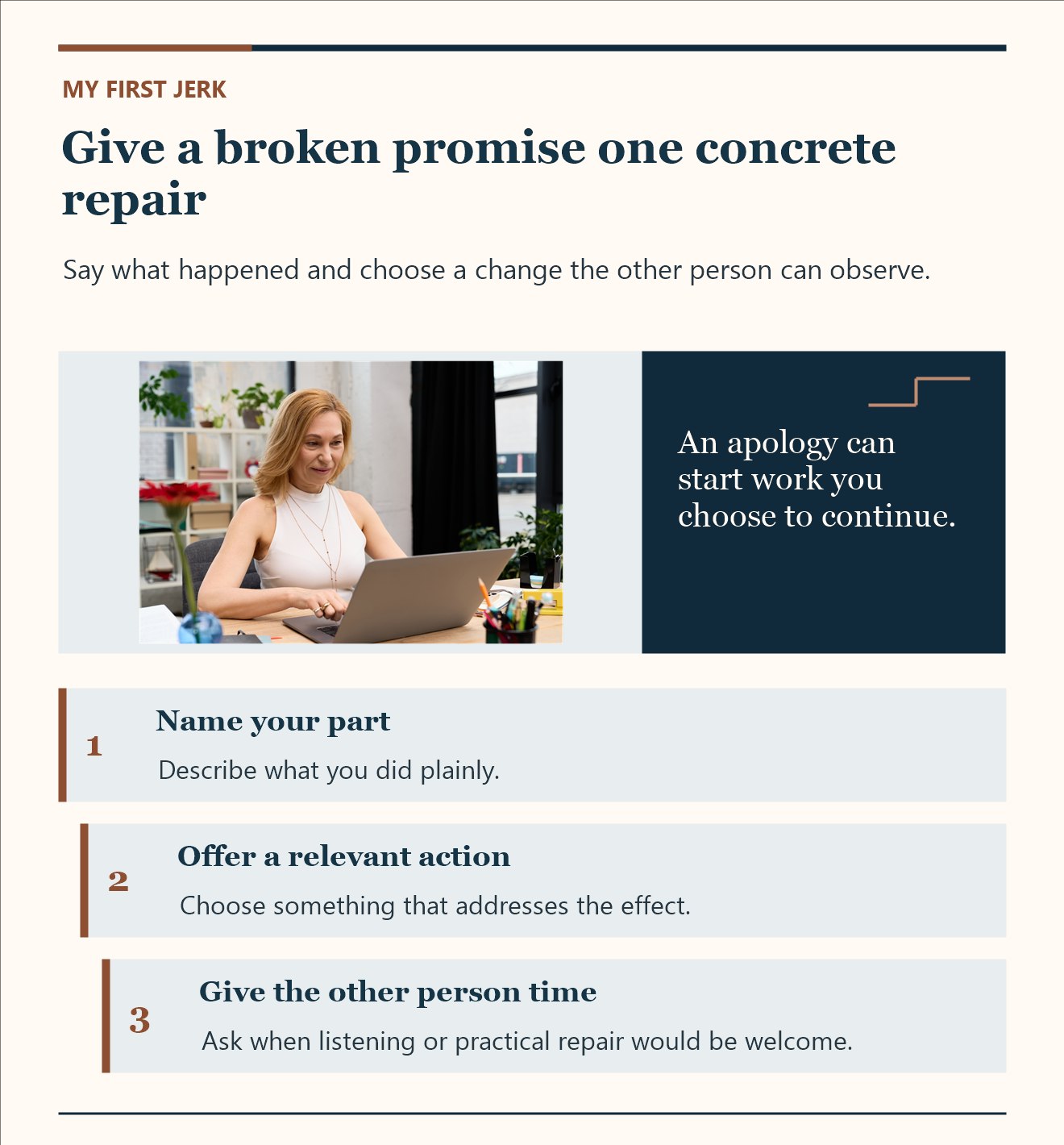
Give a broken promise one concrete repair
Say what happened and choose a change the other person can observe.
- Name your part Describe what you did plainly.
- Offer a relevant action Choose something that addresses the effect.
- Give the other person time Ask when listening or practical repair would be welcome.
An apology can start work you choose to continue.