

Thinking about leaving a relationship can involve affection, frustration, uncertainty and practical worries. You may want a clear answer while still feeling several things at once. These questions focus on the relationship you are experiencing and the choices available to you.
Take your time where you can, and give safety concerns attention first. You do not need to prove that your partner is a bad person or find a perfect explanation before deciding that you no longer want the relationship.
On this page

1. Can you make ordinary choices without fear?
Consider what happens when you say no, see friends, make a private decision or raise a concern. A request for more time together is different from threats, pressure or attempts to control your movements.
If you are afraid of a partner’s response, seek individual support with a plan suited to your situation. Love is respect’s breakup guidance explains why safety can affect how you leave. You do not have to arrange a confrontation to establish that a concern matters.
2. What has changed in your experience of the relationship?
Try describing ordinary days rather than finding one decisive sign. You might feel less interested in shared time, repeatedly unheard or uncertain about a plan. Consider when the change began and what you would like to understand.
Boredom, a difficult week or attraction to someone else does not supply a decision by itself. You can take a feeling seriously while exploring what it means to you, without treating it as proof that the relationship was always doomed.
3. Do your important wishes and plans fit together?
Ask what each person wants from the relationship now. Differences about children, commitment, where to live or how to share daily responsibilities may need direct attention. Do not rely on one person eventually wanting something else.
You may find a comfortable arrangement, need more information or decide that a difference matters too much to set aside. An incompatibility does not require either person to be wrong.
4. What kind of closeness do you freely want?
Consider affection, conversation, shared time and physical intimacy separately. You can decline touch or sex at any time. Neither person needs to offer intimacy to prove love or keep the relationship going.
If something has changed, you can discuss it when you feel comfortable. A change in desire does not make the decision for you. Focus on what you want, how you are treated and whether an arrangement is acceptable to both people.
5. Is there a change both people want to make?
If you want to explore repair, identify a specific concern and ask whether both people want to work on it. A practical agreement gives you something clearer to consider than a promise that everything will improve.
Our guide to waiting for a relationship to change offers questions about actions, compatibility and choice. You do not have to keep trying because you have already invested time, and you cannot carry out another person’s part of an agreement.
6. What support would help with your next step?
You might want a conversation, time to reflect or practical help with leaving. Think about trusted company, housing arrangements, belongings and responsibilities that need attention. Seek qualified local advice for contracts or legal questions rather than relying on a general relationship article.
A next step can be small and specific. You can ask for support, make a practical plan or state that you are ending the relationship. Mixed feelings can remain present while you make a decision.
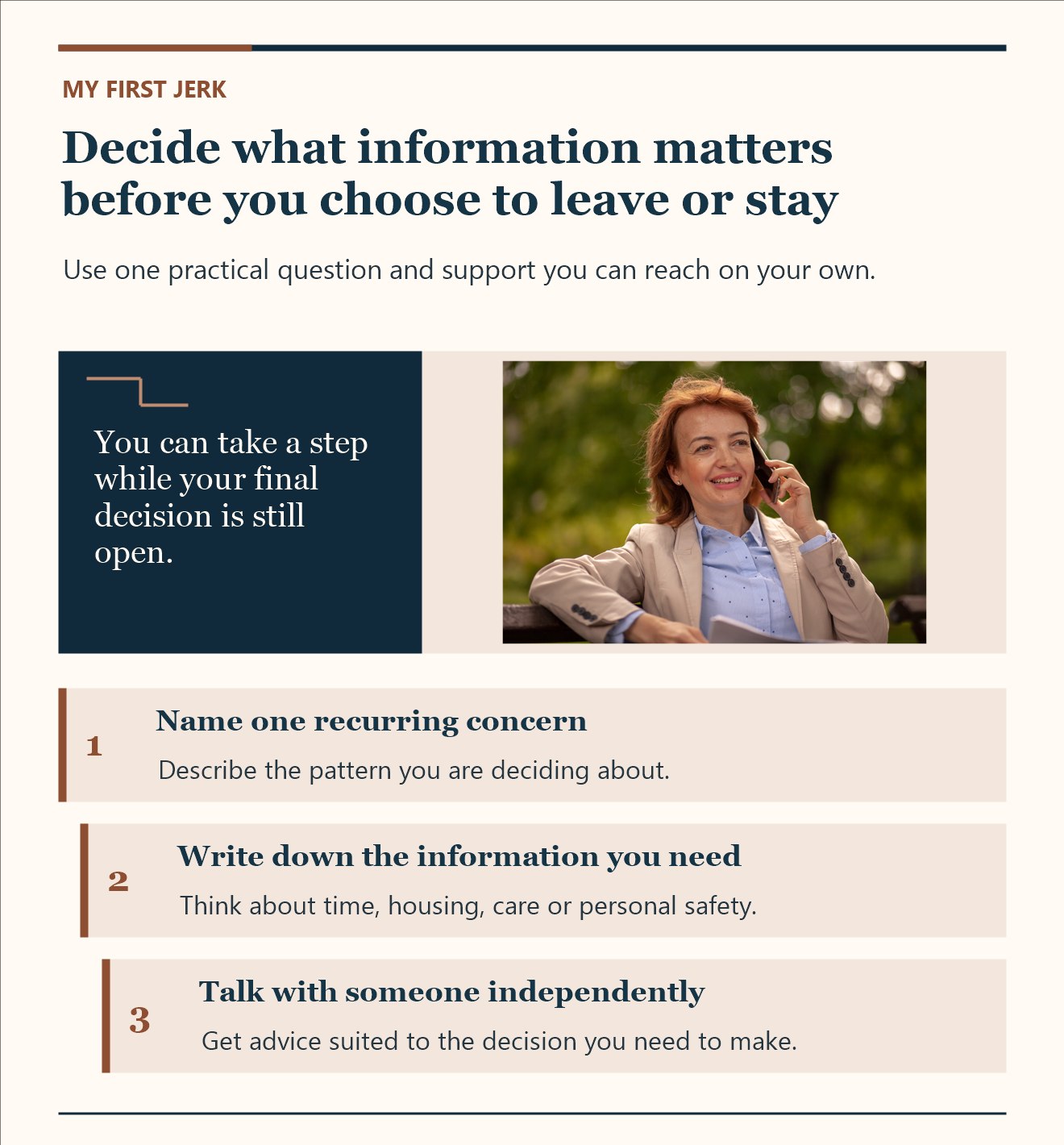
Decide what information matters before you choose to leave or stay
If your main concern is whether you can meet essential expenses on your own, identify the relevant costs and ask a local adviser or trusted person about realistic options. That is useful information whether or not you decide to end the relationship.
If someone monitors your decisions or access to money, consider independent support from a safe device or place before discussing plans. Immediate danger calls for urgent local help.
Read the infographic in text
Decide what information matters before you choose to leave or stay
Use one practical question and support you can reach on your own.
- Name one recurring concern Describe the pattern you are deciding about.
- Write down the information you need Think about time, housing, care or personal safety.
- Talk with someone independently Get advice suited to the decision you need to make.
You can take a step while your final decision is still open.