

A friendly meeting, a nostalgic message or an emotional reaction from an ex can leave you wondering whether they still love you. Those moments may mean something to them, but they cannot establish a wish to restart the relationship.
You can consider what is being said and what you want now, without treating every interaction as a clue. Reconnecting is a choice both people must freely want.
On this page

1. Separate warmth from a plan to reconnect
Someone can remember a relationship fondly, enjoy seeing you or have mixed feelings without wanting to date again. Being single for a while also does not prove they are waiting for you.
Notice whether there is a clear invitation or shared plan, rather than building a conclusion from friendliness alone. You can appreciate a pleasant conversation without deciding what it means for the future.
2. Ask directly only when contact is welcome
If you both welcome contact and you want clarity, you could ask, “Are you interested in discussing getting back together, or would you prefer to keep this friendly?” Leave room for an honest answer.
Respect a request for no contact, including being blocked. Do not use friends, another account or an uninvited visit to get around it. A question does not create an obligation to answer or reopen the relationship.
3. Consider what would need to be different
If both people express interest, talk about why the relationship ended and what has changed. A declaration of love cannot settle disagreements about commitment, trust, daily life or important future plans.
Look for specific, freely chosen arrangements rather than a promise that things will somehow improve. You can decide that the relationship is not right for you even if affection remains.
4. Do not treat jealousy or anger as proof of love
Strong reactions can have many meanings. You do not need to interpret jealousy, alternating warmth and hostility, or attempts to provoke you as evidence of hidden devotion. Focus on the behaviour and its effect on you.
If contact involves threats, pressure or fear, prioritise support and a plan suited to your circumstances. You are not required to keep engaging in order to find out what the person really feels.
5. Choose contact limits that fit your wishes
You might want friendly contact, a pause, practical messages only or no further contact. State the limit clearly where it is safe to do so. Respect the other person’s limits too, even when they are disappointing.
Friendship after a breakup is a separate mutual choice. Neither person owes ongoing emotional access or a chance to try again as compensation for the relationship ending.
6. Make a next step that does not depend on decoding them
You may never know every feeling your ex has. You can still decide whether the contact available is welcome and whether you want to consider a reunion. Your wishes count alongside theirs.
Our guide to finding closure after a relationship offers reflection on questions, boundaries and next steps. You do not have to wait for a certain signal before making room for the life you want now.
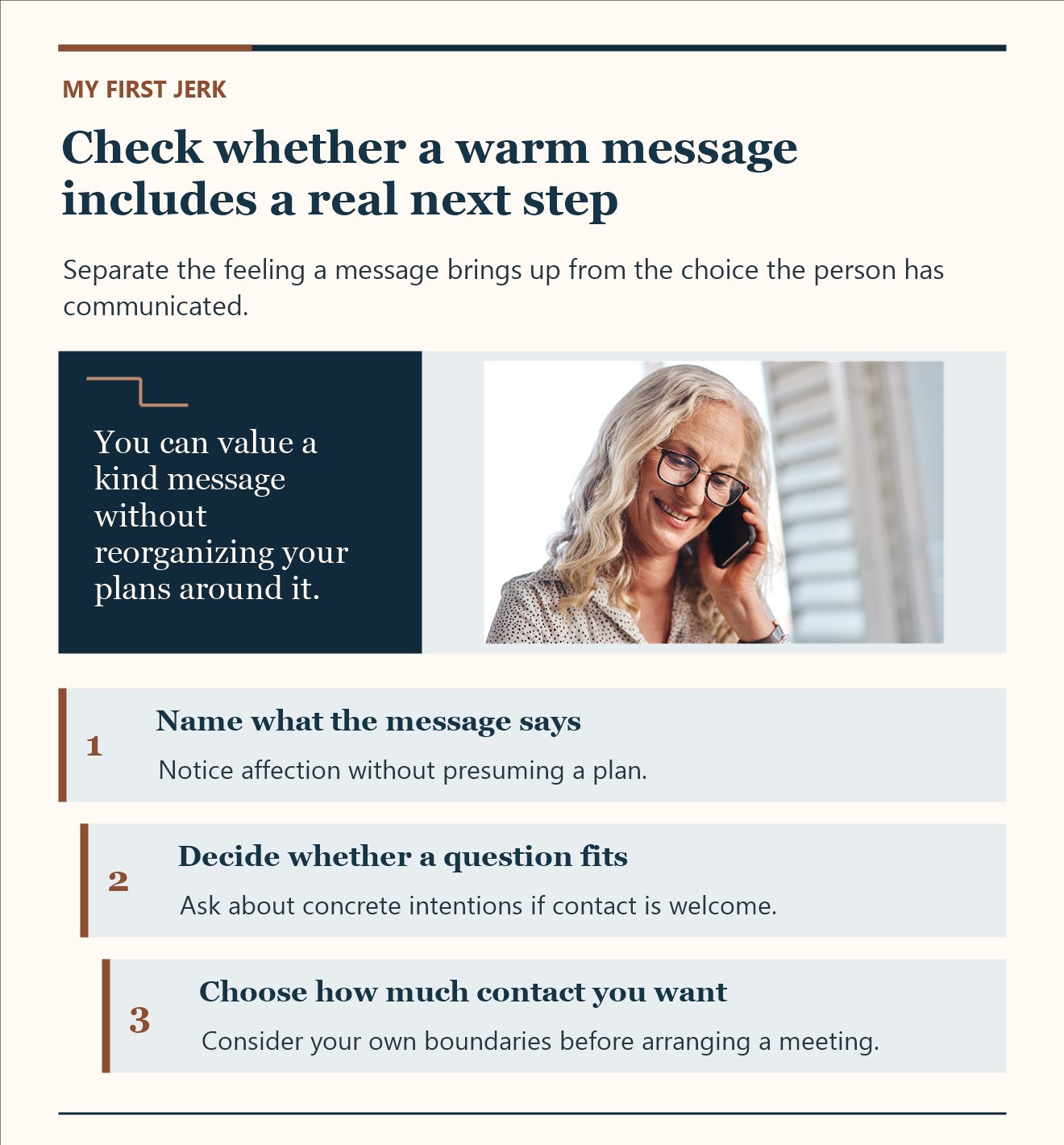
Check whether a warm message includes a real next step
If an ex writes “I miss our talks,” you can hear it as a warm statement. If you are both open to a conversation, ask what kind of contact they want now. Give yourself permission to keep the arrangement you already have if the answer stays unclear.
Look at the reason you parted and what you would need if anything changed. A new invitation and a decision about the relationship can happen at different times.
Read the infographic in text
Check whether a warm message includes a real next step
Separate the feeling a message brings up from the choice the person has communicated.
- Name what the message says Notice affection without presuming a plan.
- Decide whether a question fits Ask about concrete intentions if contact is welcome.
- Choose how much contact you want Consider your own boundaries before arranging a meeting.
You can value a kind message without reorganizing your plans around it.