

You can break up and stay friends when both people freely want that friendship and can respect its boundaries. You can also choose distance. Staying in touch is an option to consider, rather than a measure of whether you handled the breakup well.
Start with what contact would mean in your actual life: your feelings, practical responsibilities, shared friends and ability to say no. These seven checks can help you make an arrangement you can reconsider.
On this page

Check whether friendship is a free choice
Ask what you want from continued contact. You might value the friendship itself, share a community or hope that staying close will restart the relationship. Mixed feelings are understandable. Be honest about them before agreeing to a friendship that feels like waiting for another chance.
Neither person needs to prove maturity by staying friends. A friendship before dating can provide common ground, but it does not create an obligation afterward. You can care about an ex and decide that distance is more workable.
Make room for a pause
You do not need to decide on permanent friendship during the breakup conversation. If everyday messages, social media updates or one-to-one meetings keep reopening the loss, consider a period of less contact. There is no universal number of days that makes someone ready.
Be clear about the arrangement: “I need a break from messages and meeting up. I am not asking you to wait for me, and I cannot promise a future friendship.” Muting updates may help you keep that boundary. Respect a request for no contact rather than checking in through friends or another account.
Separate practical contact from social contact
Shared children, belongings, bills, work or a lease can require communication even when friendship is unwanted. Agree on an appropriate channel, the topics it covers and how to handle genuinely time-sensitive matters. Practical cooperation does not require emotional closeness.
For example, a brief message about collecting a box can stay about the collection time. It does not have to become a conversation about who was at fault. Where arrangements are disputed, seek relevant local advice rather than treating friendship as the solution.
Agree on what friendship would mean
If both of you want to try, discuss concrete boundaries instead of relying on “we will be fine.” Consider whether group meetings feel easier than time alone, how often you want contact and whether either person wants to hear about new dates.
- Ask before sharing personal news, photos or details of the breakup with others.
- Do not assume that previous intimacy permits touching, flirting or sexual contact now.
- Keep late-night support and favors within limits you freely choose.
- Leave room to change the arrangement if it becomes uncomfortable.
You do not need identical feelings, but both people need a genuine choice about participating. If you are considering romance again, decide openly whether you want to reconnect rather than using friendship as an unspoken trial relationship.
Keep mutual friends out of the middle
A shared group can make encounters more likely; it cannot guarantee an easy transition. Tell trusted friends what would help without asking them to report on your ex, deliver messages or choose a side. “Please do not update me about their dating life” is a clear request.
For a group gathering, you might arrange your own transport, attend for a shorter time or decline this invitation. Hosts can make their own plans, and you can decide which events you feel ready to attend. Your ex does not need permission to date someone else, and you can limit what you hear about it.
Notice the effect of staying in touch
After an interaction, ask whether you can return to your day or whether the contact leaves you distressed, checking your phone or hoping each kind gesture means reconciliation. These feelings do not make you a bad friend. They may tell you that this arrangement is not helping you now.
Notice behavior too. Repeated pressure, insults, ignored limits or demands for access are reasons to reconsider contact. If you fear retaliation, seek private support from a local relationship-abuse service before announcing changes or arranging a meeting. You do not have to confront someone alone to justify a boundary.
Change your answer when you need to
Trying friendship does not commit you indefinitely. You can say, “I thought I could stay in touch, but it is making it harder for me to move on. I need to step back.” You may offer a brief explanation; you do not have to persuade the other person that your feelings are reasonable.
You cannot guarantee how an ex will react. Keep your message clear and follow through in a way that fits your circumstances. A future friendship may become possible, or the relationship may end without one. Either outcome can leave room for respect and a life that moves forward.
Choose a small form of friendship after a breakup
If you both want to keep attending a Saturday volunteer shift, decide whether you’ll simply say hello there or sometimes make a separate plan. An agreement about the group can be useful even if one of you wants no contact elsewhere.
If the new contact leaves someone waiting for the relationship to restart, consider taking more space. Talk about what you need without asking the other person to promise how they will feel later.
Read the infographic in text
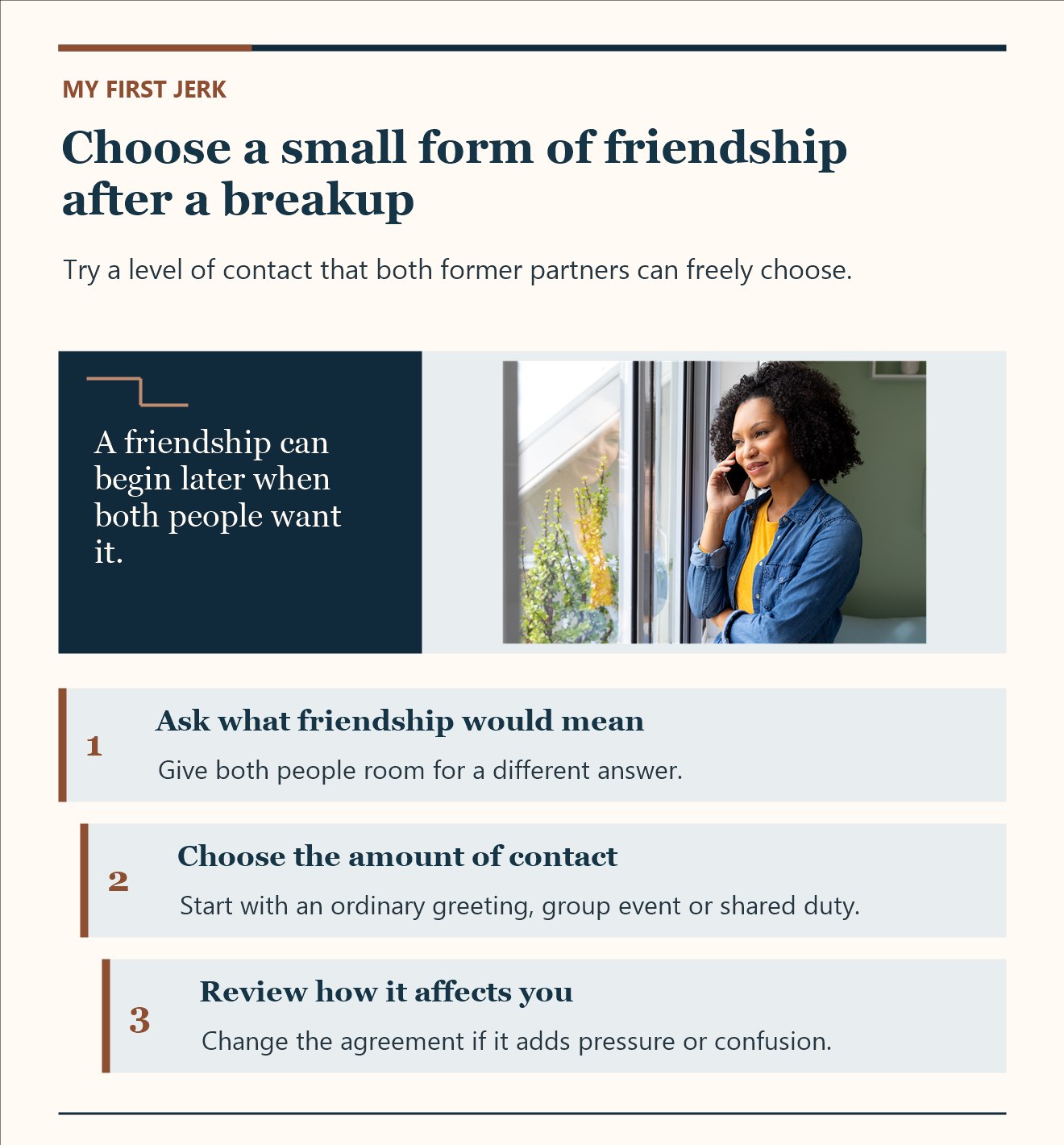
Choose a small form of friendship after a breakup
Try a level of contact that both former partners can freely choose.
- Ask what friendship would mean Give both people room for a different answer.
- Choose the amount of contact Start with an ordinary greeting, group event or shared duty.
- Review how it affects you Change the agreement if it adds pressure or confusion.
A friendship can begin later when both people want it.