

If someone stops replying after sex, you may feel hurt, confused or exposed. You might want an explanation, reassurance or a clear answer about whether you will see each other again. You do not have to pretend the silence feels fine.
What you cannot establish from silence alone is why it happened. It does not prove that you were too interested, that sex changed your value or that all men or women respond in a particular way. Focus on the next steps you can choose without solving the other person’s motives.
On this page

Decide whether one message would help you
If there has been no clear ending and contact is safe and welcome, you may want to send one straightforward message. For example: “I enjoyed spending time together. Do you want to see each other again? If not, I would appreciate a clear answer.” Adapt the wording to what you actually want.
You can also decide not to send anything further. If you have already asked, another message is not required. Respect a clear refusal or request for no contact; do not approach through new accounts, friends or a workplace to get around it.
Set a limit on how long you keep waiting
There is no universal reply deadline that reveals someone’s character or intentions. Consider your existing arrangement and any practical information you have, then decide how much uncertainty you want to keep making room for.
You can stop holding time open or checking messages repeatedly without knowing the final explanation. Muting a conversation may help you carry out that choice. If contact resumes, you can consider it then rather than leaving your plans indefinitely on hold.
For an ongoing relationship, seeking clarity about emotional distance may involve discussing the arrangement you both understood, not simply waiting for more frequent replies.
Keep practical and health needs separate from the reply
If you need to arrange the return of belongings or address another shared practical matter, keep the request brief and specific. You do not need to turn it into a conversation about the relationship.
If you have questions about sexual health, speak with a qualified healthcare provider or local sexual-health service rather than waiting for this person to answer. CDC guidance on STI testing explains that suitable tests and timing depend on individual factors, including sexual history and current practices. This is a reason to seek advice for your situation, not evidence that the other person has an infection.
If you felt pressured, unsafe or unable to consent, consider confidential support from an appropriate local sexual-assault service. You can seek help without first confronting the other person or deciding what to call the experience.
Make room for your feelings without blaming yourself
Wanting kindness or an honest answer is reasonable. A casual arrangement does not mean that you agreed to being treated dismissively, and choosing to have sex does not make you responsible for another person’s communication choices.
You may want to talk with one trusted person, return to an ordinary routine or step away from updates about the person. Share only the details you want to share. You do not have to turn the experience into a public accusation or keep it entirely to yourself.
If the experience has affected your self-esteem, try to separate what happened from broad conclusions about your body, desirability or prospects of finding a relationship.
Consider what you would want if they contact you again
A new message does not require you to resume dating or sex. You might ask what kind of contact they want and explain what you would need to consider continuing. A late apology is information to assess, not a promise of different behaviour.
Discuss expectations plainly if you both want another meeting. What does each person want now? Are plans and communication workable? You can acknowledge attraction while deciding that the arrangement is not right for you.
Allow a next step without a complete explanation
You may never receive an answer that makes the experience feel fair. That can be disappointing without preventing you from choosing less contact, different dating expectations or more support for yourself.
Finding a sense of closure does not have to depend on making someone explain every decision. You can recognise that the contact available to you is insufficient and stop participating in it. Your future choices do not need to be a verdict on your worth.
Read the infographic in text
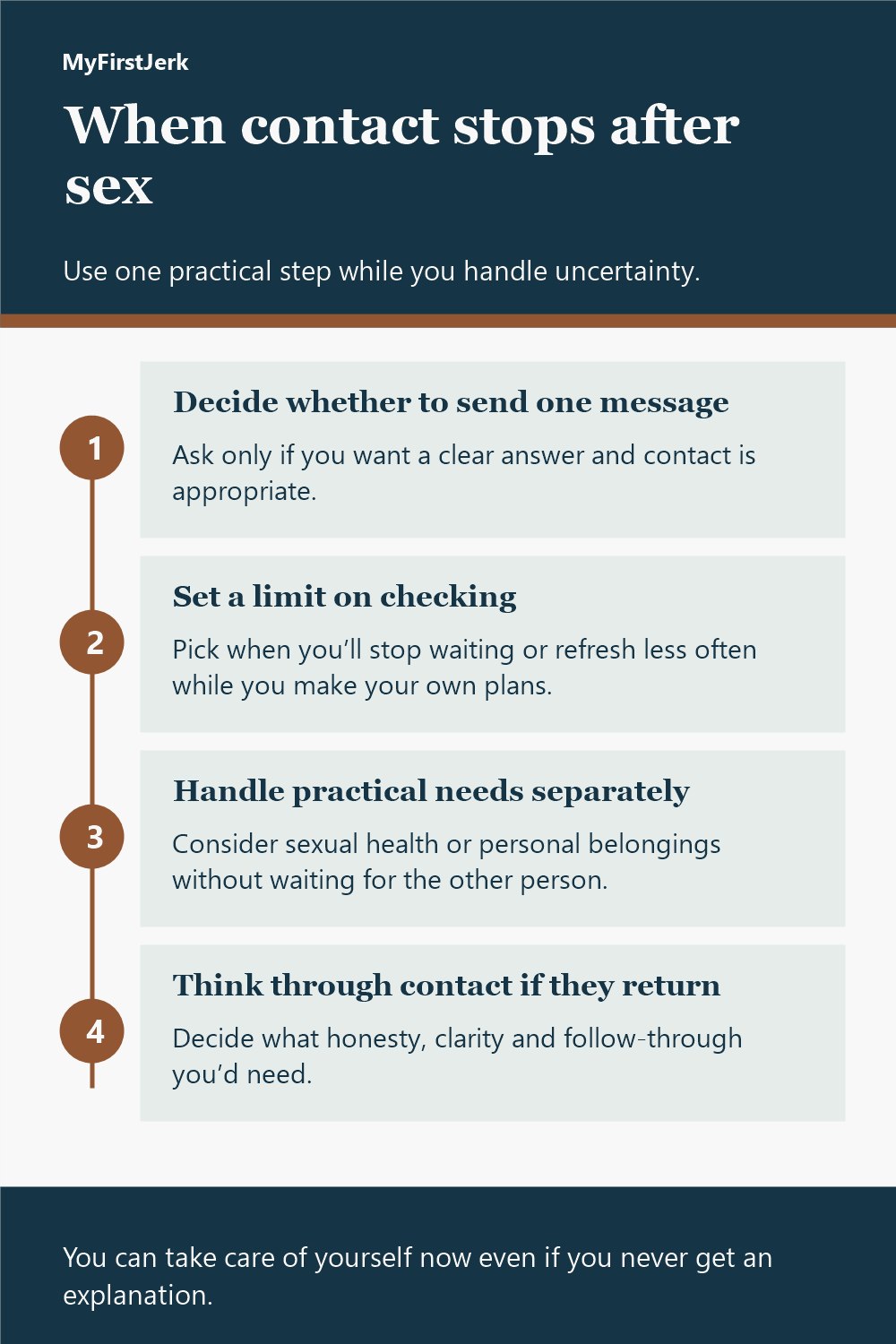
When contact stops after sex Use one practical step while you handle uncertainty.
- Decide whether to send one message Ask only if you want a clear answer and contact is appropriate.
- Set a limit on checking Pick when you’ll stop waiting or refresh less often while you make your own plans.
- Handle practical needs separately Consider sexual health or personal belongings without waiting for the other person.
- Think through contact if they return Decide what honesty, clarity and follow-through you’d need.
You can take care of yourself now even if you never get an explanation.