

Dating can feel tiring when it takes more time or attention than you want to give it. You might want a relationship while also wanting a break from searching. Neither feeling makes you a failure at dating.
Instead of trying to become irresistible or follow a rule that guarantees love, consider a few choices that make the process more workable. You can want connection without making dating the centre of every day.
On this page
- Choose a pace you can comfortably maintain
- Name the relationship you are looking for
- Separate flexible preferences from important limits
- Try one way of meeting people that suits you
- Make invitations and replies clear
- Share personal information at your own pace
- Keep room for the rest of your life
- Review the process without scoring your worth

1. Choose a pace you can comfortably maintain
Decide how much time you want to spend browsing, messaging or meeting people. You might set aside a short period for messages or leave evenings free between dates. Choose something that fits your responsibilities and energy.
A pause is also an option. You do not have to keep dating because an opportunity might disappear, and you do not need to prove that you are enjoying every part of it.
2. Name the relationship you are looking for
Consider whether you want a long-term partnership, something casual, companionship or time to explore. You can be uncertain while still sharing what you know. Ask the other person what they want rather than assuming that attraction means matching plans.
There is no need to treat a difference as a challenge to overcome. Clear information can help both people make a choice.
3. Separate flexible preferences from important limits
A shared hobby and respect for your boundaries are different kinds of consideration. Ask why a preference matters and whether it affects the life you want to share. You may be open to an unexpected match while keeping important limits.
Being open-minded does not require continuing a date you do not want. Curiosity and the freedom to decline can exist together.
4. Try one way of meeting people that suits you
You might use an app, accept an introduction or join an activity you would enjoy anyway. Choose one approach that fits your interests, access and comfort. You do not have to use every available method at once.
Be honest about your intentions. A shared activity is not an obligation to flirt, and another person’s friendliness does not establish romantic interest.
5. Make invitations and replies clear
If you want a date, a straightforward invitation can leave less room for guessing: “Would you like to meet for coffee as a date?” Agree on the practical details if the answer is yes.
If the answer is no, respect it without bargaining. You can be disappointed and still accept the person’s choice. Our article on kindness and romantic attraction considers why being considerate does not create a debt of interest.
6. Share personal information at your own pace
Getting to know someone does not require immediate disclosure of private experiences, passwords or intimate details. Choose what you want to share as trust develops. Respect the other person’s limits too.
Honesty includes being clear about a boundary, rather than revealing something before you are ready. Pressure to prove trust by abandoning privacy is a concern to take seriously.
7. Keep room for the rest of your life
Maintain time for responsibilities, interests and people who matter to you. A promising connection can be enjoyable without becoming your only source of company or reassurance.
If a date does not lead anywhere, consider a concrete next step rather than a sweeping judgement about yourself. You might return to an ordinary plan, talk with a friend or decide whether you want to keep meeting people this week.
8. Review the process without scoring your worth
Ask what felt comfortable, what took too much energy and what you would change next time. You can learn from an experience without assuming that every disappointment reveals a personal flaw.
Choose one manageable adjustment, then reassess when you want to. These changes cannot guarantee a relationship, but they can help keep your wishes, limits and everyday life present in the way you date.
Design a first date that still leaves room for the rest of your day
If a busy week gives you only an hour on Saturday, choose a café near a place you already need to go. You can explain that you have an hour and choose another date only after you know whether you would enjoy it.
If someone suggests a place or pace that makes you uncomfortable, offer an independent alternative or decline the plan. The way they handle your choice can be useful information.
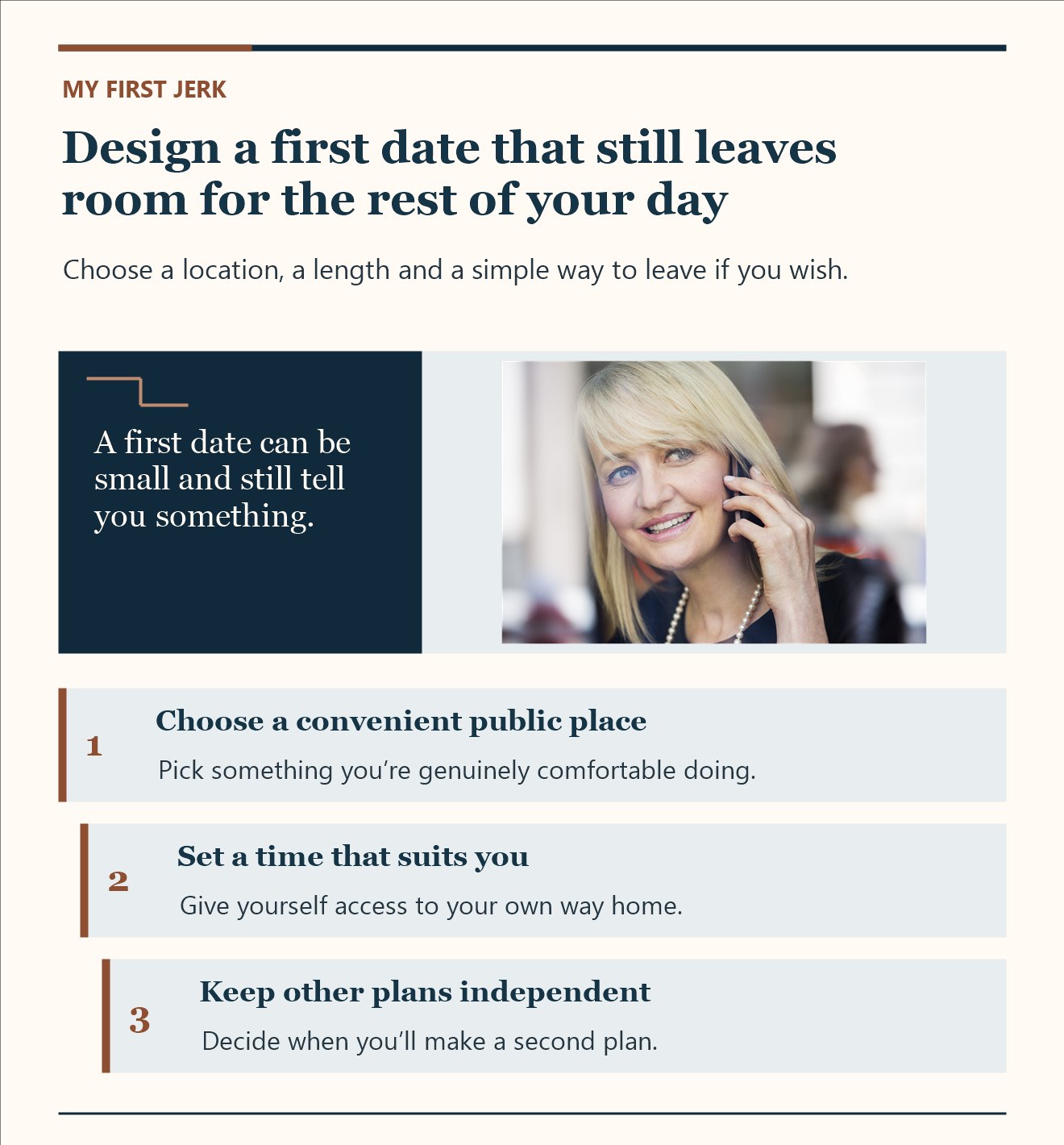
Read the infographic in text
Design a first date that still leaves room for the rest of your day
Choose a location, a length and a simple way to leave if you wish.
- Choose a convenient public place Pick something you’re genuinely comfortable doing.
- Set a time that suits you Give yourself access to your own way home.
- Keep other plans independent Decide when you’ll make a second plan.
A first date can be small and still tell you something.