

A long-distance relationship can offer meaningful connection alongside separate everyday lives. It can also involve missing each other, travel costs, time-zone differences and uncertainty about the future. Whether it suits you depends on what both people want and can realistically offer.
The six possibilities below are reasons some people value the arrangement. They are not guarantees that distance produces better communication, stronger commitment or better health. You can appreciate a benefit while recognising a difficulty that needs attention.
On this page

1. Make room for chosen conversations
When you cannot rely on being in the same room, you may choose time specifically for conversation. That can be an opportunity to share the ordinary parts of your day, ask a thoughtful question or enjoy an activity together at a distance.
A short voice message about something you noticed, a planned call or listening to the same music may suit you better than a long conversation every evening. Ask what each person enjoys. Feeling close does not require sharing every private thought or staying on a call when you are exhausted.
It is also possible to know someone well through conversation while having less experience of everyday life together. Keep room for learning how you manage practical tasks, disagreements and shared time when you do meet.
2. Build communication around real life
Distance gives you a reason to discuss how contact will work. Agree on a realistic rhythm around work, study, caring responsibilities, rest and any time difference. A plan can include flexibility rather than turning every late reply into a relationship test.
For example: “I can usually call on Wednesday evenings. If that changes, I will suggest another time.” Discuss what to do if a call is missed and which messages can wait. If one person cannot communicate freely because of their role or circumstances, be honest about what is possible.
The NHS guidance on relationships and wellbeing includes listening, clear conversations and boundaries. Those skills take practice in any arrangement. Being far apart does not automatically make either person a better communicator.
You can want reassurance without needing constant access to a partner’s location, accounts or messages. Ask for contact you would value and discuss whether the arrangement works for both of you.
3. Make commitment a clear agreement
A long-distance relationship may prompt conversations that are easy to leave vague: Are you exclusive? What does being partners mean to each of you? How will you discuss a change in feelings or availability? Avoid assuming that making an effort or travelling proves you have the same expectations.
Agree what you are choosing now rather than promising certainty about every future event. You might want a committed relationship with a review point, or you may realise that you want different things. Either answer gives you information for your own choices.
Discuss visits with attention to time, costs, accessibility and responsibilities. Sharing the planning can matter as much as the visit itself. No one should have to prove love by spending beyond their means, making every journey or accepting an arrangement they do not want.
4. Keep your interests and support network
Living separately can leave room for routines and relationships that matter to you. You might continue an evening class, spend time with friends or enjoy quiet time without needing to coordinate every part of the day.
That space still needs protecting. If you are permanently waiting for a call or cancelling local plans to remain available, ask whether the contact arrangement needs to change. Independence is easier to enjoy when both people can have a life beyond the relationship.
A partner does not have to meet every need for company or practical help. Build support where you live, at a pace that is manageable for you. Keeping friendships and interests does not mean you are less committed, and having separate lives does not remove the need for care and reliability.
5. Discuss affection and intimacy openly
Time apart may encourage you to talk about the kinds of affection you miss or enjoy. One person may want more conversation, another may value a shared activity or physical closeness during visits. Ask rather than assuming that you feel the same way.
A reunion does not create an obligation to have sex. Travel, anticipation, an earlier conversation or time since your last visit does not replace consent. RAINN’s guide to consent explains that agreement must be freely given and ongoing, and that someone can change their mind.
Plan room for rest and ordinary companionship during a visit, without making every moment intense or romantic. You can enjoy being together without meeting a script about how a long-awaited reunion should feel.
Digital intimacy also needs a shared choice and respect for privacy. No one owes sexual messages, photos or video calls. Agree before sharing personal material, and do not record or pass it on without permission.
6. Review routines and the shape of your future
Separate homes can give you more say over some daily routines. Notice whether the arrangement leaves room for sleep, meals, work, friendships and things you enjoy. Distance alone cannot tell you whether a relationship is healthier or better for you.
Look at the trade-offs too. Late-night calls, repeated travel or unequal planning may be wearing one of you down. Choose a specific adjustment, such as moving a call or sharing more of the travel planning, and see whether it makes the arrangement more workable.
If you hope to live closer together, discuss what that would involve without treating a move as proof of love. Work, housing, family ties and personal preferences all deserve consideration. It is reasonable to ask whether you share a direction even when you cannot set a definite date.
Review the relationship together from time to time: What feels good? What is difficult? What can each person offer now? You can continue, change the arrangement or decide it no longer fits. The useful benefit is a relationship you freely choose, with room for both people’s needs.
Use distance to give one conversation your full attention
If weekday calls tend to become a quick list of tasks, choose one weekend call when you both have time to tell a small story from the week. You might find one conversation more meaningful than several rushed check-ins.
Use an agreed backup when schedules change. Keep looking at what each of you wants from the relationship and whether future visits or plans remain possible.
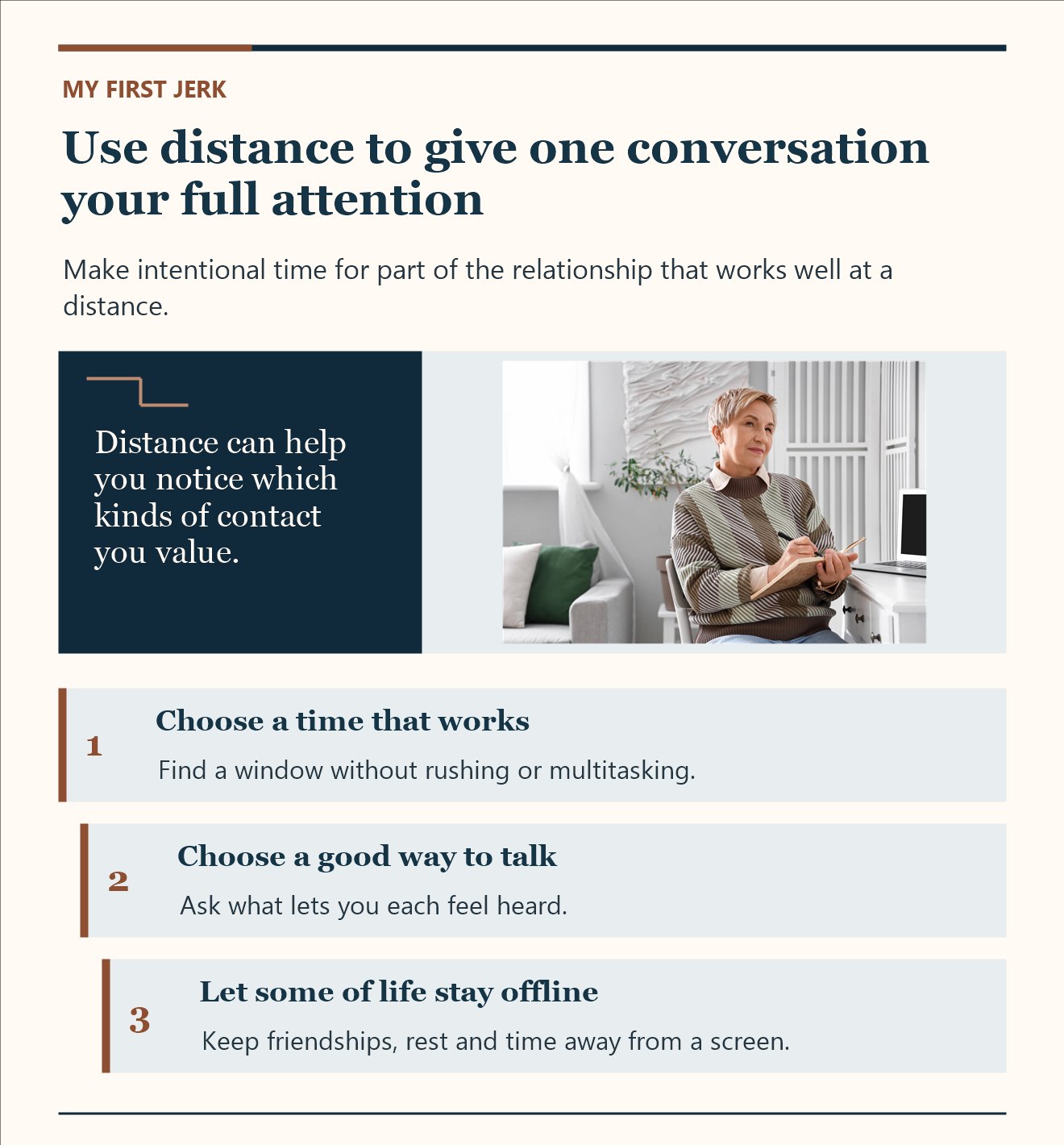
Read the infographic in text
Use distance to give one conversation your full attention
Make intentional time for part of the relationship that works well at a distance.
- Choose a time that works Find a window without rushing or multitasking.
- Choose a good way to talk Ask what lets you each feel heard.
- Let some of life stay offline Keep friendships, rest and time away from a screen.
Distance can help you notice which kinds of contact you value.