

Less contact, cancelled plans or a change in affection can leave you wondering whether your partner still wants the relationship. Those changes deserve a conversation, but they do not establish what someone privately feels. A phone habit, a quiet evening or a decision to split a bill cannot answer that question by itself.
You can ask for clarity while also considering whether the relationship works for you. You do not have to solve another person’s motives before taking your own wishes seriously.
On this page

1. Describe the change you have noticed
Separate an observation from the conclusion you are tempted to draw. “We have cancelled our last three plans without arranging another time” describes a pattern. “You never cared about me” assumes a feeling you cannot know.
Think about what matters to you: dependable plans, time together, interest in your day or a clearer agreement. Avoid turning every smile, nickname or message into a test. The question is how you are experiencing the relationship, rather than how many supposed signs you can collect.
2. Ask a clear question about the relationship
If it feels safe to talk, choose a time when neither of you is rushing. You might say, “I have noticed we are spending less time together. Do you want to continue dating, and what time can we realistically make for each other?”
Ask one question and give the person room to answer. If your concern is mainly contact, our guide to closeness, space and clear requests offers ways to make that need specific. Repeated questioning is unlikely to supply certainty that one honest conversation cannot.
3. Hear the answer without filling in the gaps
A person may want to continue, feel uncertain or want to stop. Ask what an unclear answer means in practical terms. For example, does wanting more time mean a few days to think, or no shared plan at all?
If they say they do not want the relationship, respect that answer. You do not need to persuade them to feel differently. If they want to continue, consider whether the arrangements they suggest are also acceptable to you.
4. Keep privacy, affection and costs freely chosen
A partner can have private friendships, spend time alone and decline physical affection. Changes in sexual interest or eye contact are not reliable tests of love. Neither person should offer touch, sex or access to messages to prove commitment.
Discuss date costs and introductions to family directly, without treating one gender as responsible for paying or setting a universal timetable. You can have preferences about these things while allowing the other person to have their own.
5. Choose an arrangement you both want
If you both want to continue, identify one or two changes you can actually make. That might mean arranging the next date, agreeing how to handle cancellations or choosing some time together without phone interruptions.
Notice whether the arrangement happens and whether it helps. An agreement is useful when both people freely participate. You do not need to monitor someone, carry every plan yourself or wait indefinitely for a relationship you do not enjoy.
6. Decide your next step with the information you have
You may remain unsure about someone’s feelings even after talking. You can still decide whether the contact, care and commitment available are enough for you. Taking more time, changing the arrangement and ending the relationship are choices to consider.
You are allowed to want a different relationship without proving that the other person is bad or secretly interested in someone else. If a conversation brings threats, pressure or fear, seek support rather than trying to find more persuasive words.
Ask about an ordinary change rather than guessing about interest
If your partner used to make weekend plans and now spends most weekends elsewhere, ask what changed and whether they want the two of you to keep making time. Decide whether you want to try one planned outing and talk about the result afterwards.
If they avoid the conversation repeatedly, you can choose how much contact works for you. Keep room for your own needs and think about what support would help.
Read the infographic in text
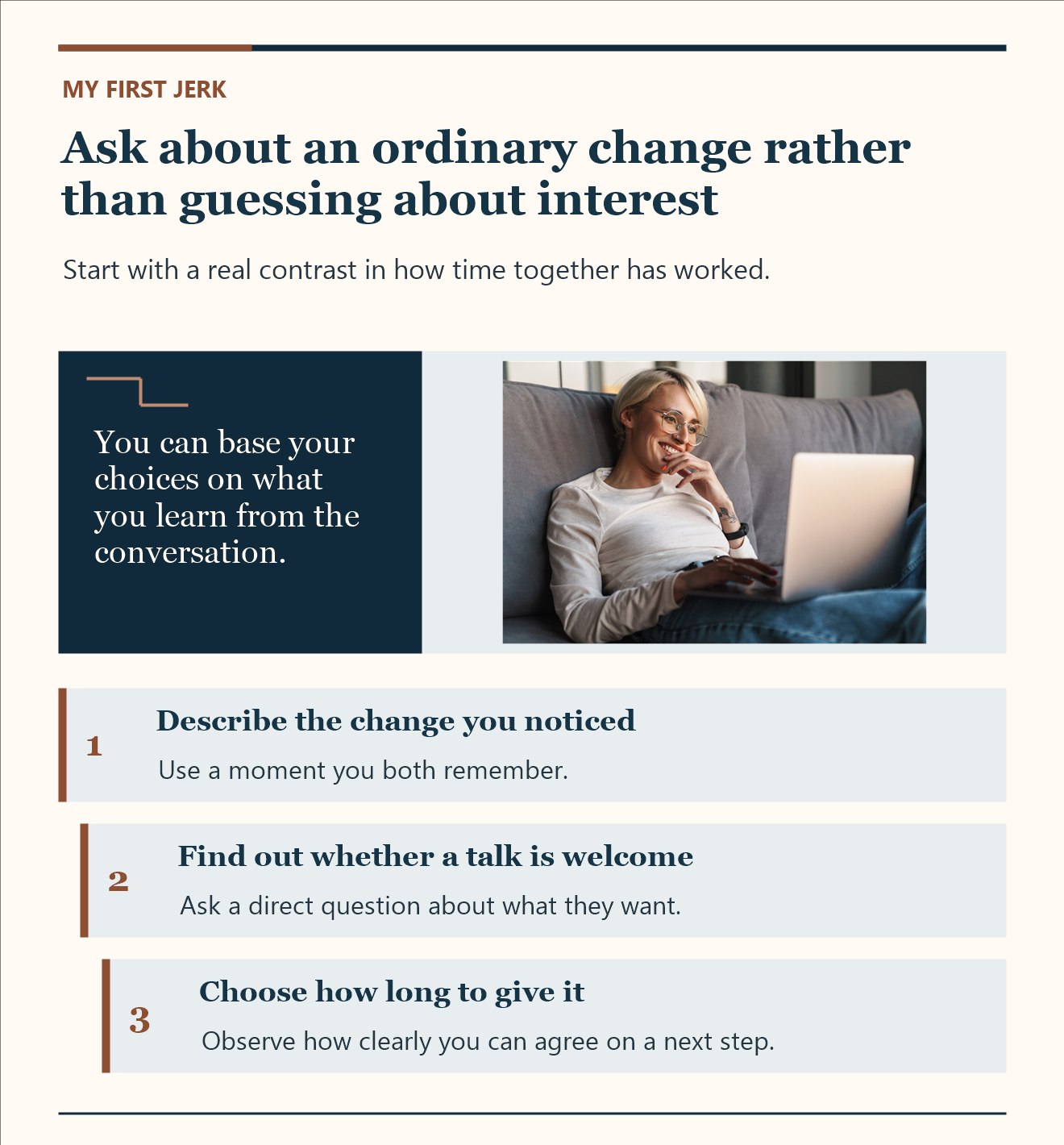
Ask about an ordinary change rather than guessing about interest
Start with a real contrast in how time together has worked.
- Describe the change you noticed Use a moment you both remember.
- Find out whether a talk is welcome Ask a direct question about what they want.
- Choose how long to give it Observe how clearly you can agree on a next step.
You can base your choices on what you learn from the conversation.